 SENDO
SENDO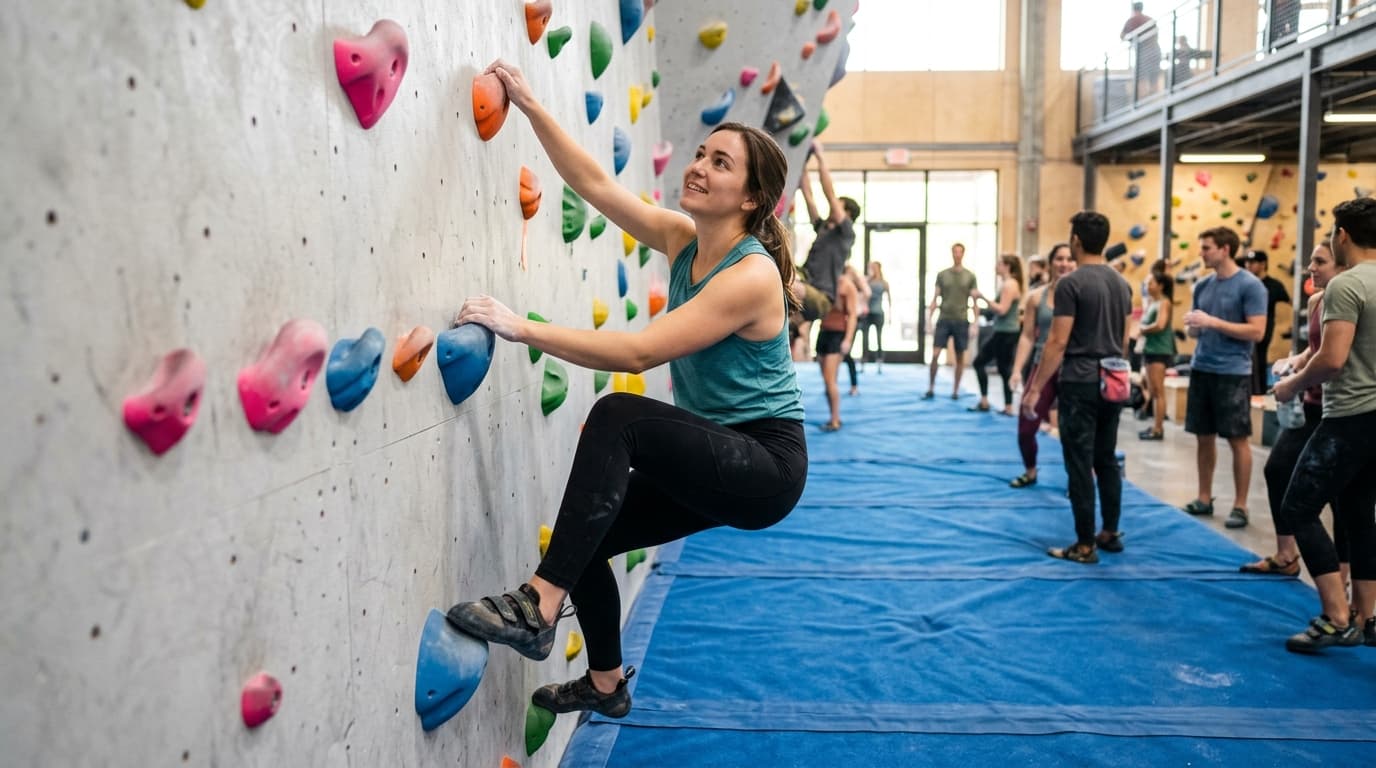
Bouldering has the friendliest on-ramp in climbing: no ropes, no harness, no partner, no course required. You rent shoes, you walk up to a wall, you climb. But your first visit goes a lot smoother when you know how a session actually works, so here’s everything worth knowing before you push open the gym door.
What to wear and what to bring
Short version: almost nothing. Slightly longer version:
- Comfortable clothes you can move in. Gym shorts or leggings and a t-shirt are perfect. Nothing baggy enough to snag a hold, nothing so tight you can’t raise a knee to your chest.
- Climbing shoes, rented. Every bouldering gym rents them for a few bucks. They’ll feel snug and a little strange; that’s the design, not a sizing mistake. Don’t buy shoes for a first visit.
- A water bottle. Bouldering is interval exercise (short bursts, long rests), and you’ll drink more than you expect.
- Skip the gloves. Nobody climbs in gloves. Your skin will feel it the next day; that’s normal and it toughens up fast.
Chalk is optional on day one; most gyms sell or rent chalk bags, but your first session will not be decided by grip humidity.
How a bouldering session works
- 1Check in and sign a waiver
Standard at every climbing gym, usually on a tablet at the front desk. Many gyms include a two-minute intro to the falling rules for first-timers; take it.
- 2Warm up
A few minutes of easy movement: arm swings, light stretching, and two or three laps on the easiest climbs in the gym. Cold fingers on small holds is how tweaks happen.
- 3Climb, rest, repeat
A boulder problem takes seconds to minutes. Then you rest, really rest, a few minutes, and try again or move on. A whole session is 60–90 minutes of this rhythm.
- 4Fail a lot (on purpose)
Falling off is the default outcome in bouldering, even for the best climber in the room. A climb you have to try five times is the sport working as intended.
The walls are short, usually 4 to 4.5 meters, with thick padded flooring underneath. That’s the whole safety system, and it’s why no ropes are needed.
How the grades and colors work
Each “problem” (that’s what boulderers call a route) is a set of holds in one color. Climb using only that color, from the marked starting hold(s) to the top hold; finishing usually means holding the last hold with control, or climbing out on top of the wall.
A tag near the start tells you the difficulty. Depending on where you are it’ll say something like V0, 4+, or 8級, three different grading systems saying the same thing. Start at the very bottom of the scale and don’t rush; the difference between a V0 and a V3 is bigger than it looks from the mat. When you’re curious how the scales fit together, we wrote a full guide: bouldering grades explained.
How to fall safely
Falling is part of every session, so learn to do it well before you learn anything else:
- Land on your feet, knees bent, then let yourself crumple or roll onto your back. Absorb, don’t resist.
- Never reach an arm straight back to catch a fall. Wrists and elbows lose that bet. Arms in, chin tucked.
- Climb down when you can. Topping out or downclimbing a few moves beats dropping from the very top every time. Your ankles bank the savings.
- Check your landing zone before you get on the wall: no water bottles, no chalk bags, no wandering toddlers.
Gym etiquette basics
Four unwritten rules cover ninety percent of it:
- Never walk or stand under someone on the wall. The mat where a climber could land is theirs until they’re off. This is the one rule everyone will actually be annoyed about.
- Take turns. One person per problem at a time; overlapping climbs share wall space, so a quick glance left and right before pulling on goes a long way.
- Don’t hog a climb. Try it, fall off, step away and rest while someone else has a go. The rotation is where the social part of bouldering lives.
- Keep advice to yourself unless asked. Telling someone the moves is called “spraying beta,” and it robs them of the puzzle. A simple “want beta?” first is the polite version.
Will you be sore? Yes. Go anyway.
Expect tired forearms by the end of the session and sore fingertips, forearms, and possibly muscles you didn’t know you owned the next morning. That’s a normal first-session tax, and it fades quickly as your body adapts, and most people are surprised how fast.
The other thing most people are surprised by: how welcoming the room is. Bouldering gyms run on strangers cheering for strangers, and nobody, genuinely nobody, is judging the person on the V0. Every climber in the building started exactly there.
Once you’re hooked (give it two sessions), the next questions answer themselves: how often should you climb? And when somebody asks whether you sent it, that is the word for finishing a climb cleanly. When you want to remember what you climbed, logging a climb takes one tap.