 SENDO
SENDO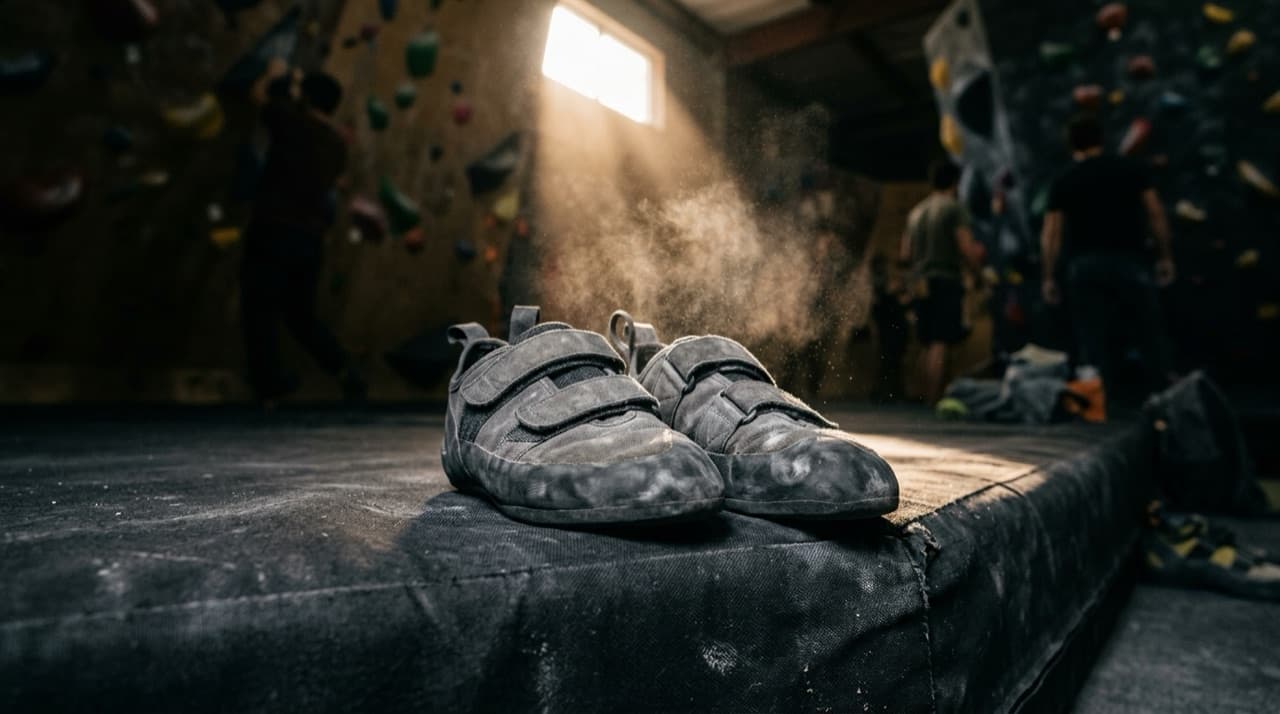
Edging is standing on the edge of your shoe. Not the flat sole, but the stiff rim of rubber that runs around the front of it, placed deliberately on something small: a thin ledge on rock, a bolt-on foothold the size of a coin, a lip you can only get part of your foot onto. It is one of the two ways a climber uses their feet, and the one beginners skip.
The other is smearing, which is pressing as much sole as you can against blank wall and trusting friction. Edging needs a hold; smearing does not. Almost every foot placement you make is one or the other.
Why it works
A climbing shoe is built around a stiff midsole, and the rubber is wrapped over the edge of it. Put that rim on a hold and the shoe becomes a small shelf: the load runs through the sole rather than through your toes bending. That is the whole trick, and it is why edging feels secure on a hold you could not stand on in trainers.
It also explains the two things that go wrong. Roll your ankle so the shoe tips off the hold and the rim is no longer flat on it. Place the middle of the foot instead of the front and there is no stiff edge under you at all.
Inside edge, outside edge
Inside edge is the big-toe side of the shoe, just behind the point. It is the strongest part, the easiest to see while you place it, and the right answer for most moves where your chest faces the wall.
Outside edge is the little-toe side. It comes into its own the moment you turn a hip in to reach past yourself, because the inside edge cannot stay on the hold through that rotation. Beginners tend to discover it by accident on their first steep problem and then wonder why the move suddenly worked.
How to edge better, in four habits
- Look at the foot as you place it. Precision is the entire skill. A hold two centimetres wide punishes a placement that was close enough.
- Keep the heel level or a touch high. A dropped heel levers the rubber off the hold, which is what people mean when they say a shoe rolled.
- Stand up on it. Weight over the foot loads the edge; hanging back off your arms unweights it and it skates.
- Place once. Adjusting a foot on a small hold usually loses it. Aim, place, commit.
Shoes, briefly
Stiffer shoes edge better, because the midsole carries the load instead of your toes. That is why stiff, flatter shoes get recommended for slabs and vertical walls, and softer, more downturned ones for steep, grabby indoor bouldering where sensitivity and toe-hooking matter more. Neither is the right shoe in general, and neither will fix a placement made with the arch of your foot. If you are still deciding, the first-shoes guide covers fit before it covers anything else, in the right order.
FAQ
What is edging in climbing?
Edging is standing on the edge of your climbing shoe, rather than the flat sole, so that the stiff rim of the rubber sits on a small hold. It is how you stand on anything narrower than your whole foot: a thin ledge, a bolt-on foothold, a crimpy edge on the rock.
What is the difference between edging and smearing?
Edging puts a small part of the shoe on a definite hold, and works because the rubber and the shoe are stiff enough not to fold. Smearing puts as much sole as possible flat against blank wall and works through friction and the angle of your ankle. Edging needs something to stand on; smearing does not.
Should I use the inside or the outside edge?
Inside edge (the big-toe side) for most straight-on moves, since it is the strongest and easiest to see. Outside edge (the little-toe side) when you turn a hip into the wall to reach past yourself, which is where it becomes essential rather than optional.
Do you need stiff shoes for edging?
Stiffer shoes edge better because the midsole carries the load instead of your toes, which is why they are usually recommended for slabs and vertical walls. Soft shoes can edge, they just ask more of your feet, and they trade that away for grip when smearing and sensitivity on steep ground.
Why do my feet slip when I edge?
Usually one of three things: the heel is dropped so the shoe rolls off the hold, the foot is placed with the arch rather than the toe area, or the leg is straightening and pulling the shoe outward. Weight over the foot with the heel level or slightly high fixes most of it.
Edging is one of a few dozen words the gym will throw at you in your first month. The beginner glossary explains the rest in plain language, and what to expect at your first session covers the practical side. Once the technique starts sticking, the way to see it is to log the sessions: SENDO is a free bouldering logger for exactly that.